Compilation of Telecommunications History Resource Hub

Let’s explore the evolution of telecommunications through some fascinating historical resources. Whether it’s discovering the impact of the telegraph or understanding the crucial role of satellites, this field is rich in discoveries. Although our daily lives today largely depend on digital technologies, their origin dates back several centuries, illustrating a complex and intriguing path that has shaped our current interactions.
The invention of the telegraph
The telegraph marks a fundamental step in the history of communications. Allowing the transmission of messages over long distances through electrical signals, it revolutionized the way information was disseminated. For example, in the 1840s, the electric telegraph enabled the creation of the first line between Washington and Baltimore, laying the foundations of a global network. By delving into the period of its development, one discovers the first Morse codes and the technical innovations that made faster and more efficient exchanges possible. Some cities then experienced a true economic and social transformation thanks to this increased speed of communications.
The birth of radio
Radio played a crucial role in the development of telecommunications. With the invention of wireless radio at the end of the 19th century, voices and music crossed oceans, connecting people separated by thousands of kilometers. The study of this period highlights the notable contributions of pioneers such as Tesla and Marconi. The live broadcast of significant events, like the radio narratives of World War II, transformed radio into an essential mass media in the 20th century.
The beginnings of telephony
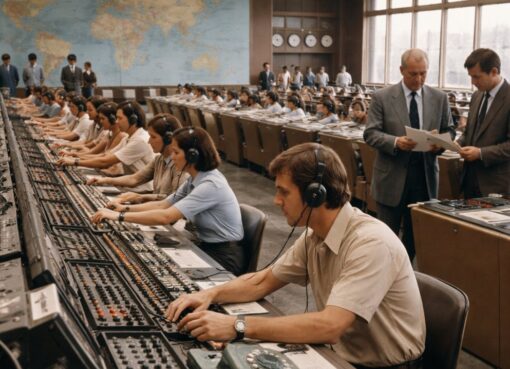
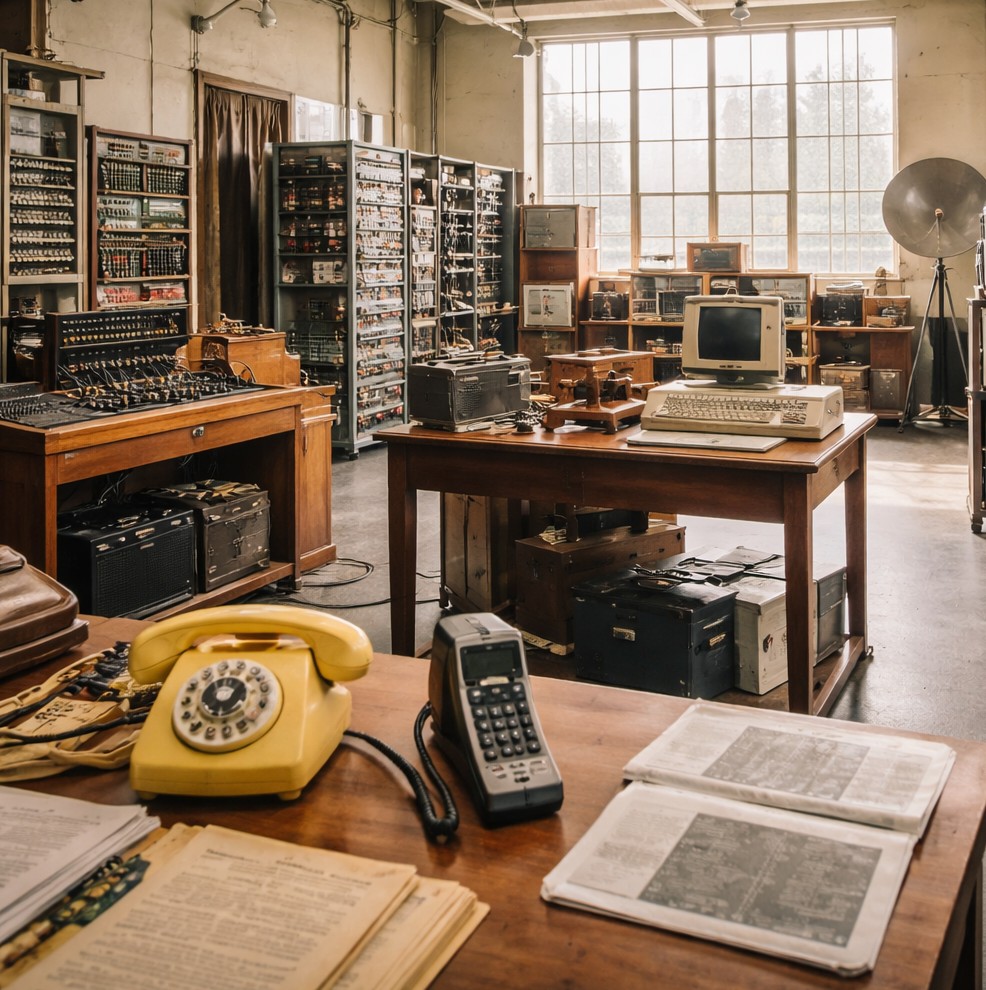 The impact of the telephone on society cannot be overstated. The first telephone systems radically changed interpersonal communication. Innovations in this field allowed families and businesses to communicate effectively, highlighting the importance of the pioneering work of Alexander Graham Bell. Thanks to the gradual expansion of telephone networks and the emergence of automatic exchanges, long-distance calls became more accessible, promoting economic and cultural exchanges. By following the technical developments and the expansion of telephone networks, one better understands how technology has integrated into daily life.
Satellites and the space age
With the launch of Sputnik in 1957, the world entered the space age. The development of artificial satellites transformed telecommunications, enabling real-time data transmissions and facilitating global communications. Satellites have become essential for navigation systems, television, and even the Internet. Analyzing the advances in this field offers a unique perspective on global interconnection. For example, the Intelsat I satellite, launched in 1965, enabled the first live television broadcast between North America and Europe, a daring endeavor at the time.
The impact of computer networks
The evolution of computer networks enabled the development of the Internet, a driving force of modern telecommunications. From the early days of Arpanet to the Internet we know today, these networks have changed the way we communicate, access information, and work. By exploring the early communication protocols and the challenges of global network integration, one gains an overview of the innovations that have shaped our era. Notably, the invention of the World Wide Web by Tim Berners-Lee in the early 1990s opened access to a vast library of information on a global scale.
The transition to mobile technologies
Mobile technologies have redefined human interactions and access to information. From the first mobile phones to today’s smartphones, this revolution has transformed our daily lives. Understanding the key stages of this evolution, from analog technologies to advanced digital systems, allows for a better grasp of current and future telecommunications trends. Innovations in this sector include the introduction of 5G technology, which promises to improve connection speeds and facilitate the development of connected objects (IoT) in our daily lives.
Ultimately, the history of telecommunications is a journey through time, revealing a remarkable technological progression that continues to shape our world. These resources offer a valuable gateway for anyone wishing to understand this fascinating dynamic, without which our modern society would not exist as we know it. Each of these evolutions reflects not only technical advances but also profound societal changes that continue to influence how we live, work, and learn together.