7 Milestones in Early 1900s Telecommunications History

In the early 1900s, telecommunications underwent a period of rapid transformation that laid the groundwork for the modern communication technologies we rely on today. Here’s a look at seven key milestones from that era that significantly shaped the trajectory of the industry.
1. The Rise of the Automated Telephone Exchange
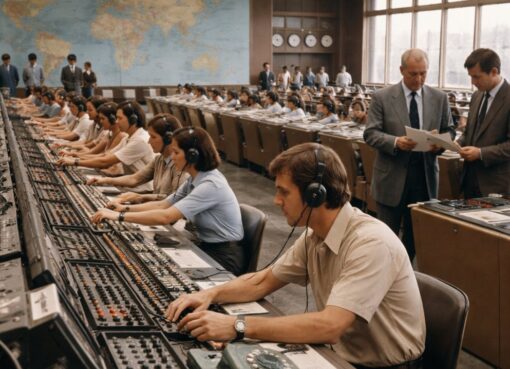
The development of the automated telephone exchange was a major step forward. Before its advent, telephone calls were connected manually by operators. In 1891, Almon Strowger invented a stepping switch, which led to the first automatic exchange in 1900. This innovation allowed people to make direct calls without operator assistance, paving the way for the modern telephone system. This shift not only increased the efficiency of call handling but also reduced the potential for human error, making communication more reliable and accessible. The implementation of automated exchanges marked a significant increase in the volume of calls managed per day, extending networks far beyond urban areas and empowering rural communities with improved connectivity.
2. The Advent of Radio Broadcasting
 The early 20th century witnessed the birth of radio broadcasting, an innovation that reshaped mass communication. In 1906, Reginald Fessenden successfully transmitted the first audio radio broadcast on Christmas Eve. This achievement not only demonstrated the potential of radio waves to carry sound but also sparked a revolution in how information was shared across distances. The ability to broadcast music, voice, and news over the airwaves provided an unprecedented means of informing and entertaining the public. This medium quickly became indispensable in times of emergency, offering real-time updates and public service announcements, thus enhancing societal cohesion.
3. Introduction of the Vacuum Tube
Lee De Forest’s creation of the vacuum tube in 1906 was crucial for telecommunications. This device amplified electrical signals and became a critical component in early radio, telephone, and television systems. The vacuum tube’s invention marked the beginning of the electronic age, enabling faster and more reliable communication. Its role in amplifying weak signals was particularly important for long-distance communication, such as international broadcasts and transcontinental telephone calls, thereby extending the reach and influence of broadcasters and telecommunication services alike, enabling greater information flow across borders.
4. Transatlantic Wireless Communications
In 1901, Guglielmo Marconi achieved a historic feat by successfully sending the first transatlantic wireless signal from England to Newfoundland. This breakthrough demonstrated that wireless communication over long distances was possible, laying the groundwork for global communication networks. The ability to connect continents without physical cables represented a major leap in communication technology, significantly reducing the time it took to relay information across oceans and influencing global diplomacy, trade, and media.
5. The Birth of Commercial Radio Stations
The 1920s saw the rise of the first commercial radio stations, forever changing the landscape of information dissemination. The first official station, KDKA in Pittsburgh, began broadcasting in 1920. This development made radio a staple in homes, providing news, entertainment, and educational content to a wide audience. Commercial radio stations also pioneered new advertising techniques, showcasing their potential as powerful marketing tools. The sponsorship model that emerged allowed stations to financially sustain their operations while delivering diverse programming to the public, fostering cultural exchange and community identity through tailored content.
6. Development of Long-Distance Telephony
Another significant milestone was the expansion of long-distance telephony. The introduction of coaxial cables in the 1930s improved voice transmission quality over long distances. This advancement made long-distance phone calls more reliable and accessible, connecting people across countries and continents like never before. The enhancement of long-distance networks was critical for businesses, enabling them to coordinate operations globally and facilitating international trade. Personal communications also grew, as families separated by geography could maintain closer ties.
7. Emergence of Telegraphy Improvements
While the telegraph had been around since the 19th century, the early 1900s saw improvements that enhanced its efficiency. Innovations such as multiplexing allowed multiple messages to be sent simultaneously over a single wire, increasing the speed and capacity of telegraphic communication. These enhancements helped maintain the telegraph’s relevance even as newer technologies emerged. Telegraphy remained vital for real-time communications in various sectors, including military, shipping, and railroads, thanks to its reliability and broad coverage.
Each of these milestones represents a leap in technology that brought the world closer together. The early 1900s were a time of technological ingenuity, setting a foundation for rapid advancements in telecommunications. As innovations in communication continue to unfold, these historical developments remain a testament to human creativity and the relentless quest for connectivity. The lessons learned from these innovations highlight the importance of investing in research and development to drive continuous improvement and adaptation in the face of ever-evolving global communication needs.